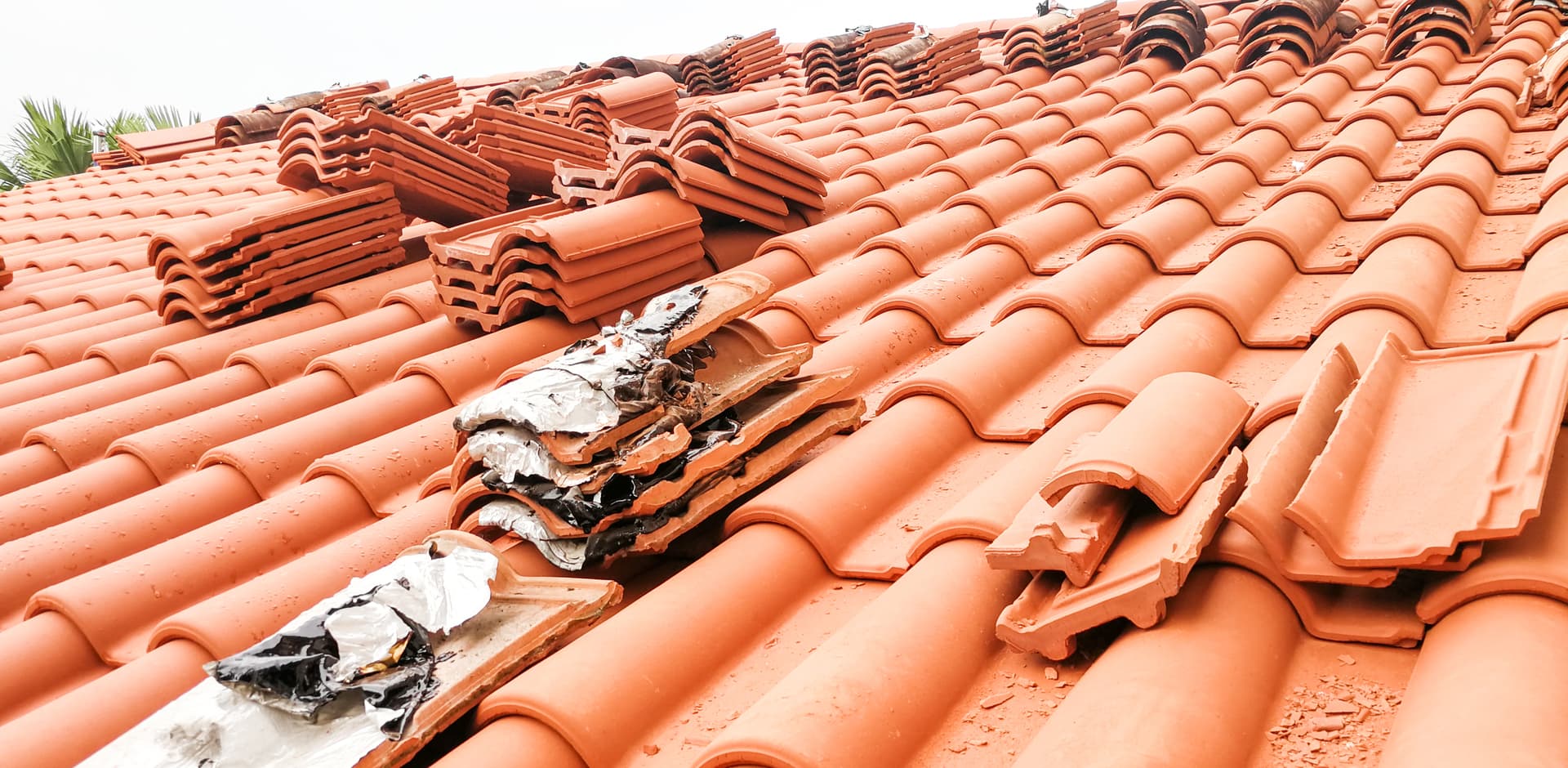
Planning a Roof Replacement? Protect Your Driveway, Pavers and Pool Deck First
What a roofing project's heaviest loads do to the concrete around your Palm Beach Gardens home
A roof replacement is one of the biggest projects a Palm Beach Gardens home will ever go through. Most homeowners focus on the roof itself — tile or shingle, color, warranty. Very few think about what the job does to the ground around the house.
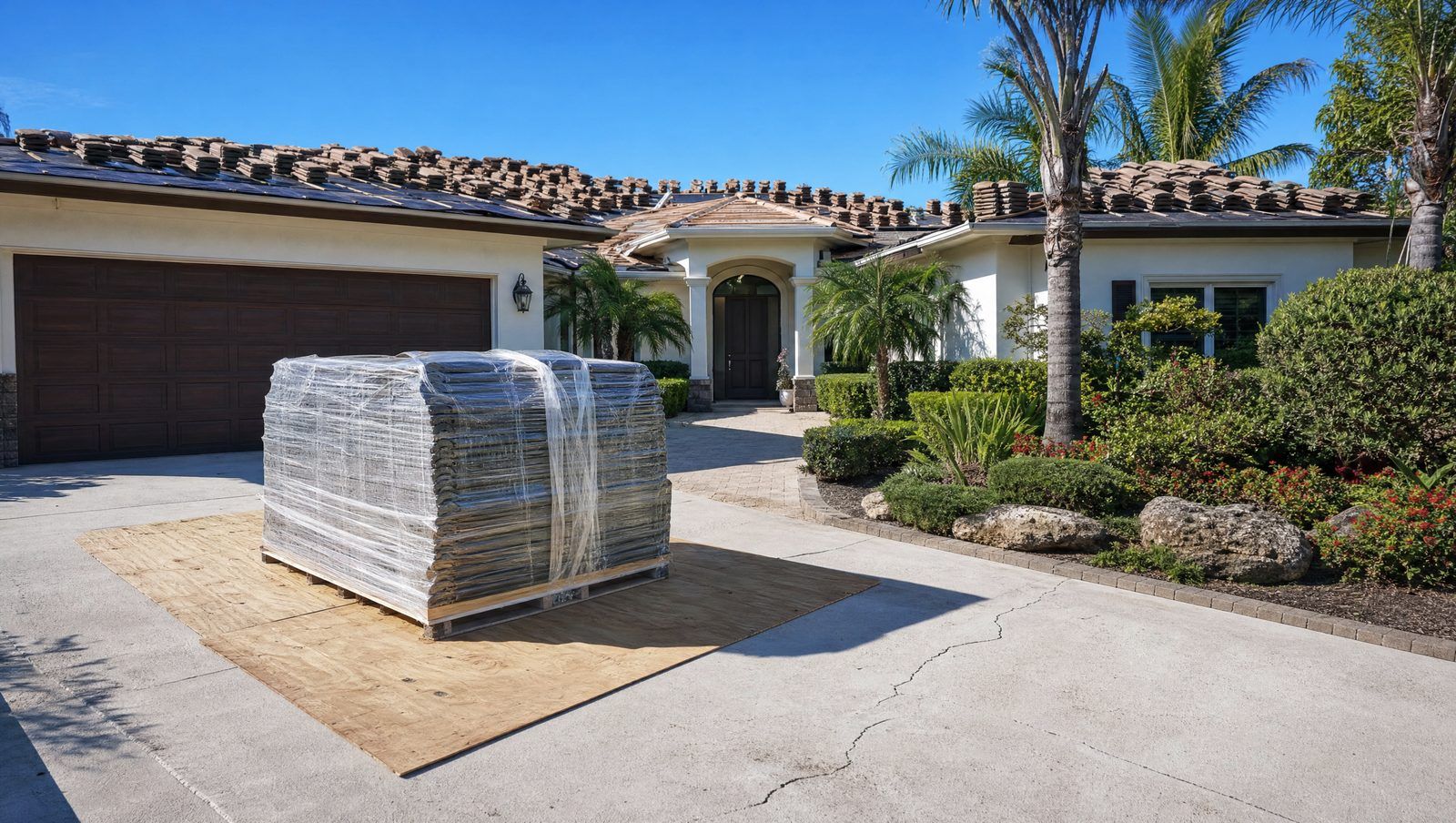
That's a mistake, because the heaviest part of a roofing project usually sits on your driveway. Tile pallets, roll-off dumpsters and delivery trucks put serious weight on concrete that was poured for a couple of cars. With a little planning, you can protect your driveway, pavers and pool deck instead of paying to fix them afterward.
How Much Weight Lands on Your Driveway
A single pallet of concrete roof tile can weigh well over two thousand pounds. A full tile roof might arrive as a dozen or more pallets, plus underlayment, batten strips and fasteners. Then there's the dumpster for tear-off, which gets heavier every hour as old tile and debris go in.
Most residential driveways are around four inches thick and designed for passenger vehicles spread across four tires. Concentrated loads — a pallet's corners, a dumpster's steel rails, a delivery truck's outriggers — are a different animal. That's when you see new cracks, chipped edges and slabs that settle unevenly.
What to Ask Your Roofer Before Day One
Ask where materials will be staged and where the dumpster will sit. A good crew will put down thick plywood under dumpster rails and pallets to spread the load. If they don't mention it, ask for it. It costs very little and prevents a lot of damage.
Ask about the delivery truck, too. Boom trucks often load tile directly onto the roof, and their stabilizers press hard on whatever they're set on. If your driveway already has cracks, point them out and take photos before work starts so everyone agrees on the starting condition.
Protecting Pavers, Pool Decks and Walkways
Pavers handle weight differently than poured concrete. They can shift, sink or rock out of their sand bed under a heavy point load. Keep dumpsters and pallets off pavers whenever possible, and if they have to go there, insist on plywood spread wide.
Pool decks and side walkways take a different kind of beating — falling debris. Old tile and nails come off the roof edge all day long. Tarps and plywood along the drip line protect the surface and make cleanup faster. Ask your roofer to run a magnetic sweep at the end of every day, not just the last day.
When the Concrete Needs Its Own Expert
Sometimes a roof project exposes concrete that was already struggling. Years of roof runoff landing in the same spot can undermine the soil under a slab, and the extra weight of a project finishes the job. If a section of driveway or walkway is cracked through, sunken or tilting toward the house, that's not a roofing fix.
That's true well beyond South Florida. Reputable concrete contractors in Lafayette, Indiana, will tell you the same thing we see here: slabs fail where water and weight team up, and patching the surface without fixing what's underneath just postpones the repair. Whether it's freeze-thaw up north or saturated sandy soil down here, a sound base is what keeps concrete flat.
The smart order of operations is usually roof first, then concrete. Finish the heavy work above, let the trucks and dumpsters leave, then repair or replace the slab so it doesn't get damaged twice.
A Simple Pre-Project Checklist
Before your roof replacement starts, walk the property and photograph your driveway, pavers, pool deck and landscaping. Agree with your roofer on staging locations and plywood protection in writing.
Move vehicles, planters and outdoor furniture well clear of the work zone. And when the job is done, walk it again with your contractor before the final payment. A new roof should protect your home for decades — it shouldn't leave a cracked driveway behind as a souvenir.